Recipe Books for Different Client Goals: Fat Loss, Muscle Gain & Maintenance
Learn how to create goal-specific recipe books in HubFit for fat loss, muscle gain, and maintenance. Discover section structures, macro strategies, and meal ...
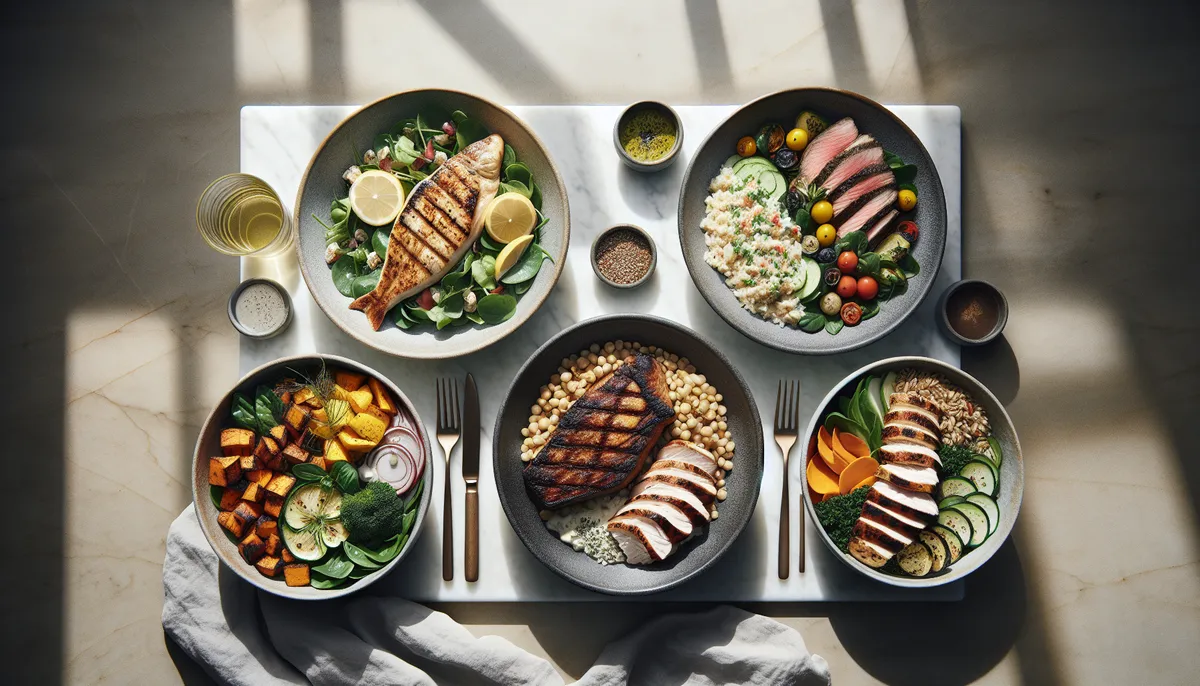
Your client’s goal isn’t just a label. It’s a lens through which their entire nutrition approach should be organized.
A fat-loss client needs meals that keep them full on fewer calories. A muscle-gain client needs calorie-dense options that support growth. A maintenance client needs balance and flexibility.
Yet many coaches create one generic recipe book and expect it to serve all clients equally. It doesn’t. A recipe that’s perfect for someone building muscle is demotivating for someone in a deficit.
In HubFit, you can create multiple recipe books, each tailored to a specific client goal. This targeted approach dramatically increases client engagement and results.
Let’s explore how to build three distinct recipe books: one for fat loss, one for muscle gain, and one for maintenance.
The Fat Loss Recipe Book: High Volume, High Protein, Low Calorie
The Philosophy
Clients in a caloric deficit face constant hunger. Your recipe book’s job is to provide meals that are:
- High volume (large portions that feel satisfying)
- High protein (keeps them full and preserves muscle)
- Low calorie (fits within their deficit)
This is the art of “calorie density management,” maximizing food volume while minimizing calories.
Suggested Sections for Fat Loss
Structure your fat loss recipe book around calorie targets:
| Section | Calorie Target | Typical Composition |
|---|---|---|
| Under 300 Cal Breakfasts | 200-300 | Protein + high-volume carbs (oatmeal, fruit) |
| Under 400 Cal Lunches | 350-400 | Lean protein + vegetables + small carb portion |
| Under 400 Cal Dinners | 350-400 | Lean protein + high-volume vegetables + rice/potato |
| High-Volume Snacks | 100-150 | Low-cal, high-fiber options |
| Protein Smoothies | 200-300 | Protein powder + fruit + liquid, minimal fat |
| Sides & Vegetables | Variable | To mix-and-match with main dishes |
Display Format
For fat loss clients, display macros like this:
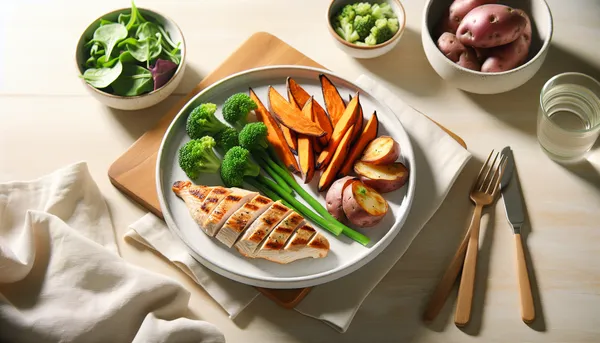
Grilled Chicken & Roasted Broccoli Bowl
350 cal | 40g protein | 28g carbs | 8g fat
Serves: 1 | Prep time: 15 min
Why these numbers first? Because fat loss clients are hyperaware of calories. Make their calorie target visible before they click deeper.
Example Meals for Fat Loss
Breakfast:
- 150g plain Greek yogurt + 100g berries + 20g granola
- Macros: 220 cal | 18g P | 32g C | 3g F
- Note: “High protein, high volume. Stays with you all morning”
Lunch:
- 150g grilled chicken breast + 300g roasted vegetables + 100g white rice
- Macros: 380 cal | 42g P | 48g C | 5g F
- Note: “Prep-friendly and portions are easily adjustable”
Dinner:
- 180g lean ground turkey + 200g sweet potato + 200g steamed broccoli + 1 tbsp olive oil
- Macros: 395 cal | 38g P | 42g C | 9g F
- Note: “High satiety. The vegetables fill you up”
Snacks:
- Rice cakes + PB2 powder (2 tbsp) + banana slices
- Macros: 140 cal | 6g P | 28g C | 1g F
- Note: “Low-calorie treat that hits carbs and protein”
Macro Considerations for Fat Loss
- Protein: 30g+ per meal to maintain satiety and muscle
- Fiber: Emphasize vegetables and whole grains; this adds volume without many calories
- Fat: Keep moderate (5-15g per meal); fats are calorie-dense
- Carbs: Prioritize complex carbs and fibrous sources
The Muscle Gain Recipe Book: Calorie-Dense, Protein-Rich, Growth-Focused
The Philosophy
Clients building muscle need to eat in a surplus, but eating enough without feeling stuffed is the challenge. Your recipe book should provide:
- Calorie-dense meals (more calories in reasonable portions)
- Protein-rich (30g+ per meal, supporting muscle protein synthesis)
- Nutrient-dense (not just empty calories; foods that support recovery)
A muscle-gain client doesn’t need to feel as full as a fat-loss client. They need to hit higher calorie targets efficiently.
Suggested Sections for Muscle Gain
| Section | Calorie Target | Typical Composition |
|---|---|---|
| 600+ Cal Breakfasts | 600-800 | Eggs + oats + fruit + nut butter |
| 700+ Cal Lunches | 700-900 | Protein + calorie-dense carbs + healthy fat |
| 800+ Cal Dinners | 800-1000+ | Protein + rice/pasta + sauce/oil |
| 1000+ Cal Meals | 1000-1200 | Massive portions for quick gains |
| Post-Workout Fuel | 400-600 | Fast carbs + protein for recovery |
| Calorie-Dense Smoothies | 400-600 | Protein powder + oats + nut butter + fruit |
| Snacks & Sides | 200-400 | Trail mixes, granola, nut butters |
Display Format
For muscle gain clients, emphasize total calories and protein:
Beef & Rice Power Bowl
1050 cal | 45g protein | 120g carbs | 25g fat
Serves: 1 | Prep time: 20 min | Post-workout friendly
Protein is still critical, but calorie density takes center stage. Make it easy to see how a single meal contributes meaningfully to their daily surplus.
Example Meals for Muscle Gain
Breakfast:
- 3 whole eggs + 50g oats + 30g granola + 1 tbsp almond butter + 1 banana
- Macros: 680 cal | 28g P | 72g C | 25g F
- Note: “Calorie-dense breakfast to start your surplus strong”
Lunch:
- 200g chicken breast + 250g white rice + 150g mixed vegetables + 2 tbsp olive oil
- Macros: 840 cal | 46g P | 95g C | 20g F
- Note: “Classic muscle-building ratio; easy to adjust portions”
Post-Workout Meal:
- 150g salmon + 300g sweet potato + 100g asparagus + 1 tbsp olive oil
- Macros: 750 cal | 42g P | 72g C | 22g F
- Note: “Omega-3s + fast carbs for optimal recovery”
Calorie-Dense Snack:
- Homemade granola trail mix: 50g granola + 25g almonds + 25g dried fruit
- Macros: 420 cal | 12g P | 48g C | 18g F
- Note: “Portable, nutrient-dense; easy to fit between meals”
Macro Considerations for Muscle Gain
- Protein: 30-40g per meal, supporting consistent protein synthesis
- Carbs: Higher carbs (60-100g+ per meal) to support training and recovery
- Fats: Don’t fear fat; it’s calorie-dense and supports hormone production
- Total Calories: Meals should range 600-1000+ depending on client’s daily surplus
The Maintenance Recipe Book: Balanced, Flexible, Variety-Focused
The Philosophy
Maintenance clients have achieved their goal and now need sustainable, flexible nutrition. They don’t want rigid structure; they want:
- Balance (reasonable portions of everything)
- Flexibility (meals they actually enjoy, room for creativity)
- Variety (enough options to prevent boredom)
A maintenance recipe book is less prescriptive and more “here are options for any occasion.”
Suggested Sections for Maintenance
| Section | Macro Profile | Typical Composition |
|---|---|---|
| Balanced Breakfasts | ~400 cal | Protein + carbs + moderate fat |
| Quick Lunches | ~550 cal | Lean protein + vegetables + reasonable carbs |
| Balanced Dinners | ~600 cal | Protein + complex carbs + healthy fat |
| Restaurant-Friendly | ~500-700 cal | Real-world dining options, macro-aware |
| Weekend Meals | Flexible | Higher-calorie, more indulgent options |
| Healthy Desserts & Treats | 100-200 cal | Satisfying without derailing goals |
| Flexible Snacks | 150-250 cal | Portable, satisfying options |
Display Format
For maintenance clients, emphasize simplicity and enjoyment:
Baked Salmon & Quinoa Buddha Bowl
580 cal | 38g protein | 55g carbs | 16g fat
Serves: 1 | Prep time: 25 min | Restaurant makeable
Include notes about when to eat it (“Good for dinners with variety”) and whether it’s restaurant-adaptable. Maintenance clients value flexibility.
Example Meals for Maintenance
Breakfast:
- 2 whole eggs + 2 slices whole-grain toast + 1/2 avocado + 1 cup mixed berries
- Macros: 420 cal | 16g P | 48g C | 16g F
- Note: “Balanced morning that keeps you satisfied without being heavy”
Lunch:
- 120g turkey + whole-grain wrap + hummus + vegetables + 1 oz cheese
- Macros: 520 cal | 32g P | 52g C | 14g F
- Note: “Easy to customize; works at home or on the go”
Dinner:
- 150g baked white fish + 200g roasted vegetables + 150g wild rice + 1 tbsp olive oil
- Macros: 580 cal | 36g P | 58g C | 14g F
- Note: “Classic, elegant, and feels like real food, not a ‘diet’”
Weekend Treat:
- Homemade pizza: whole-wheat crust + tomato sauce + 100g cheese + vegetables + 50g pepperoni
- Macros: 650 cal | 28g P | 68g C | 20g F
- Note: “Indulgent and satisfying; fits maintenance macros”
Macro Considerations for Maintenance
- Protein: 25-35g per meal; moderate, not obsessive
- Carbs: Flexible (40-70g per meal); no need to be restrictive
- Fats: Balanced; not limiting, not excess
- Total Calories: Meals should hover around 400-650 calories, flexible based on daily activity
Cross-Goal Strategy: Should You Create Separate Books?
Yes. While you could create one book with sections for each goal, separate books are better because:
- Cleaner User Experience: A client scrolling a fat-loss book doesn’t see muscle-gain meals that don’t apply to them
- Easier Sharing: You assign the fat-loss book to fat-loss clients, muscle-gain book to muscle-gain clients
- Goal Reinforcement: The book itself reinforces your coaching; every section aligns with their specific objective
- Flexible Updates: You can update goal-specific recipes without affecting others
In HubFit, you can create and manage multiple recipe books easily. Build three focused collections rather than one generic one.
Making the Switch: When to Update Client Books
As clients progress and goals shift:
- Fat loss → Maintenance: Gradually introduce maintenance meals to transition them up in calories
- Maintenance → Muscle gain: Shift to larger portions and more calorie-dense options
- Muscle gain → Fat loss: Swap high-calorie meals for high-volume, lower-calorie alternatives
Communicate these transitions clearly. “Your body composition has improved. Let’s shift your recipe book to support your next phase: building muscle.”
Final Thoughts
Your recipe book is a reflection of your coaching philosophy. When you tailor it to specific goals, you’re telling clients: “I understand what you need right now, and I’ve built a resource specifically for you.”
That specificity drives engagement, consistency, and ultimately, results.
Build Goal-Specific Recipe Books in HubFit Today
Whether you’re coaching fat loss, muscle gain, or maintenance, HubFit makes it simple to create targeted, goal-aligned recipe books that clients actually use.
Start with one goal-specific book and measure the difference in client engagement. You’ll be amazed.
Related Reading:

The HubFit team shares expert insights on training, nutrition, and wellness to help coaches and clients achieve their fitness goals.