How to Use On-Demand Workouts to Onboard New Coaching Clients
Turn your on-demand workout library into a powerful onboarding tool that impresses new clients from day one.

The first 48 hours with a new coaching client are critical. This is when they decide whether they made the right choice. Is this coach legit? Is this investment worth it? Will this actually work?
Most coaches use the first week for assessment, paperwork, and initial consultations. But you could be doing something more impactful: you could be showing your new clients exactly what they’re paying for.
A well-crafted Workout Studio turns onboarding from a bureaucratic process into an experience. It’s your first chance to demonstrate expertise, build confidence, and kick off momentum before your client’s first training session.
The Power of First Impressions
Your client just invested in your coaching. They’re excited, but also slightly anxious. They want proof that this decision was smart.
A polished, professional-looking workout library delivers that proof immediately. It says: “This coach doesn’t just talk about fitness. They’ve built something. They’re organized. They’re professional.”
Compare this to a coach who starts with a consultation call and a “we’ll send you a program next week.” Your new client is now sitting in an information vacuum, second-guessing their purchase.
The coach with the Workout Studio? The new client is already exploring, already engaged, already building confidence. That’s momentum.
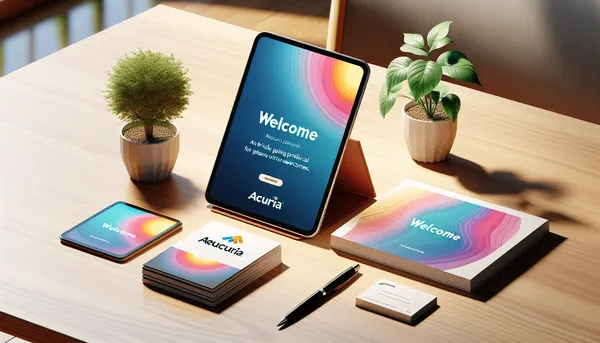
Creating a “Welcome” or “Getting Started” Studio
Start with one studio specifically designed for new clients. Call it “Getting Started,” “Welcome,” or “Your First 30 Days.” This studio is your onboarding tool.
This studio should include:
Beginner-Friendly Foundation Workouts
- Movement quality and form mastery
- Lower intensity, higher instruction
- Exercises scaled for different ability levels
- Clear demonstrations and coaching cues
Quick Wins
- 15–20 minute workouts that fit any schedule
- Results-oriented (these workouts deliver sweat and effort)
- Confidence-building (new clients see they can do this)
Variety
- Different modalities: strength, conditioning, mobility
- Different equipment requirements: bodyweight, dumbbells, minimal equipment
- Enough options that new clients feel they can pick what fits their day
Progression Pathways
- Early workouts build competence
- Middle workouts introduce slightly more challenge
- Later workouts prepare them for your full programming
Your new client opens the app on day one and immediately sees structure. They can see the journey ahead. They can pick a workout based on how they feel, what equipment they have, and how much time they have. No friction. They have full autonomy.
Structuring Beginner-Friendly Content
New clients need more guidance, not less. This means:
Longer intros and form cues Beginners benefit from 30–60 seconds of setup and instruction before the work begins. Experienced clients find this tedious. New client studios should err on the side of more guidance.
Slower tempos Your advanced clients might do 3-second concentric, 1-second pause, 2-second eccentric. Your new client studio should feature 2-second concentric, 1-second pause, 3-second eccentric. Slower is safer and builds better movement patterns.
Scaling options Every exercise needs at least two difficulty tiers. Show the standard version and a regression. Your new client can choose their level without feeling broken.
Minimal equipment options Assume your new client doesn’t have a fully stocked gym. Build workouts that work with dumbbells, bodyweight, or bands. Save the Olympic lifting and specialty equipment for advanced studios.
Using Studios as Part of Your Onboarding Flow
Timing matters. Here’s an effective onboarding sequence:
Day 1: New client signs up. You immediately share your “Getting Started” studio. They receive a notification: “New Workout Studio Added.” That same day, they can explore and pick their first workout. You send a welcome message: “Welcome to [Your Coaching]. Start with any workout in your Getting Started studio. There’s no wrong choice.”
Day 2–3: New client has likely done their first workout. They logged performance. They got a small win. Now you send an initial assessment form or consultation booking.
Day 4–7: After your consultation, you build a personalized training program for them. You can keep them in the Getting Started studio OR move them to role-based studios (e.g., “Hypertrophy Track,” “Strength Track,” “Conditioning”).
This flow gets your new client moving before you do any analysis. They’re experiencing the product before they go through paperwork. The momentum is already there.
Pairing Studios With Training Programs
Your new client might have both a structured training program (with specific workouts on specific days) and access to your Workout Studio. These are complementary, not contradictory.
The training program is their blueprint. The studio is their flexibility and depth. Maybe their Monday program says “Upper Body A,” but you have five different Upper Body A variations in your studio. They can pick based on how they feel, what equipment they have, or what they want to focus on.
This hybrid approach gives clients the best of both worlds: expert-designed periodization paired with autonomy and choice.
Notification Strategy
When you add new workouts to your studio, clients are notified automatically. This is retention gold for new clients.
A new client who sees “New Workout Studio Added: Advanced Core Training” on day 10 gets a subtle reminder that you’re active, updating, and invested. That signal of engagement keeps them engaged.
Set a rhythm: add 2–3 new workouts to your Getting Started studio every two weeks during the first two months. Your new client will see consistent proof that you’re a coach who shows up.
The Long-Term Impact
A new client who gets a Workout Studio on day one isn’t just more impressed. They’re more likely to complete your onboarding, more likely to follow through on training, and more likely to hit their first milestone.
They’re also more likely to tell others. “My coach has this whole library of on-demand workouts I can do anytime.” That’s not how most fitness coaching sounds. It sounds professional. It sounds like a real product. It makes your coaching business look bigger and more serious than it might actually be.
And here’s the thing: it’s not just optics. You are building something bigger and more serious. You’re moving from one-off coaching to a scalable system.
Related Reading
Once you’ve onboarded your first client with a studio, learn how to Keep Your Workout Content Fresh and Engaging. Ready to expand? See How to Share Workout Studios With Clients the Right Way. And for the full picture, check the HubFit Workout Studio Ultimate Guide.
The HubFit team shares expert insights on training, nutrition, and wellness to help coaches and clients achieve their fitness goals.