Why Hybrid Coaching Models Need On-Demand Workout Libraries
How combining in-person sessions with on-demand workout content creates a better coaching experience.

The future of fitness coaching isn’t either/or. It’s not “in-person only” or “online only.” It’s hybrid.
More gyms, studios, and personal trainers are adding online coaching to their in-person offerings. More online coaches are adding occasional in-person sessions or workshops to their virtual programs. The two are converging because clients want it, and it creates a better coaching experience than either alone.
But here’s what separates hybrid programs that thrive from ones that struggle. It’s the quality of what happens between in-person sessions.
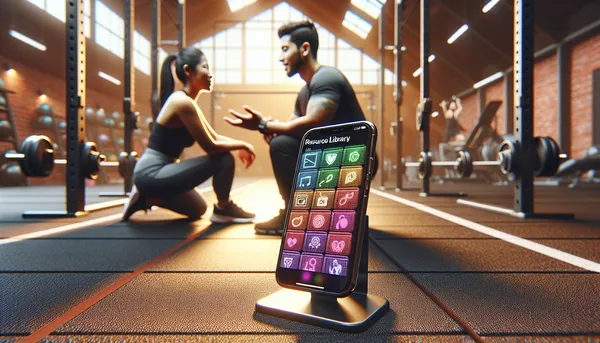
When a coach sees a client once a week in person, what happens during the other six days? That’s where on-demand workout libraries come in. They bridge the gap. They extend the coach’s reach beyond those one-hour sessions and create a more cohesive, valuable coaching experience.
What Hybrid Coaching Actually Looks Like
Hybrid coaching combines in-person and online components. But there are different ways to structure it:
Model 1: In-Person Coaching With Online Accountability
A coach works with a client in-person once or twice a week (maybe for group classes, maybe for personal training). Between sessions, the client follows a training program online: either a custom program the coach wrote or workouts from the coach’s on-demand library.
The coach checks in online (maybe via messaging, maybe by reviewing logged workouts). The in-person sessions are used for form coaching, new programming, and relationship-building. The online workouts are the actual work the client does most days.
Model 2: In-Person Workshops With Ongoing Online Programming
A coach offers in-person workshops or intensives (once a month, maybe quarterly). These are immersive, high-touch experiences. Between workshops, clients work through an on-demand library from the same coach.
This model works well for coaches with a geographically dispersed audience who can’t train in-person often, but who value periodic in-person connection.
Model 3: Hybrid Studio Model
A gym or studio offers both in-person classes and on-demand access to those same classes (or complementary workouts) online. Clients can come to class when they want, or stream from home when they can’t make it in.
Model 4: Premium Tier With On-Demand Add-On
A coach offers pure online coaching as the base offering, with an optional premium tier that includes occasional in-person sessions or group calls.
All of these models share one thing: there’s work happening between the high-touch moments. And that gap is where on-demand libraries create tremendous value.
The Gap Between In-Person Sessions Is Where the Work Happens
Let’s say you’re a trainer who sees each client once a week for a 60-minute personal training session. That’s 4 hours per month, per client.
That means there are 672 other hours per month when your client isn’t working with you directly.
What happens during those hours?
If you’re not careful, it’s chaos. The client does random workouts. They might start a home routine but lose consistency. They ask “what should I do today?” and you’re not there to answer. Their progress slows. They get frustrated and consider quitting.
But if you’ve given them access to your on-demand workout library, the experience is completely different. When they open your app, they see:
- 30 workouts organized by goal and equipment
- Your recommended next workout based on what they did last time
- Video demonstrations of every exercise
- Easy logging to track their performance
- Your coaching cues and form tips built into the videos
Suddenly, those 672 hours between sessions are productive. Your client is still being coached and following your programming. They’re building momentum and consistency. When you see them in person, you’re coaching at a higher level: refining and advancing, not starting from scratch.
The in-person session becomes more valuable because the client is already moving well, consistent, and ready to progress. And the on-demand library becomes more valuable because it’s connected to a real coach who sees them in person and adjusts their programming.
That’s the power of hybrid: the two components amplify each other.
Why Hybrid Coaching Is Growing
Three reasons why this model is becoming the default:
1. Clients Want Both
In-person training is irreplaceable for form coaching, accountability, and the motivational boost of working together. But clients also value flexibility, variety, and the ability to work out on their own schedule.
Hybrid lets them have both. They get the coaching and accountability of in-person, plus the flexibility and autonomy of online.
2. It Extends Reach Beyond Geography
If you’re a personal trainer in a city, you could theoretically expand to clients in nearby suburbs or even nationally by offering hybrid. They come in-person once a month, then do on-demand programming the rest of the time.
This is especially powerful for boutique studios or specialized coaches. A strength coach in Denver could work with clients across the Mountain West this way.
3. It’s More Viable Than Pure In-Person for Many Coaches
If you’re running a solo personal training business, you can only see so many clients per week. Adding on-demand workouts for those clients lets you serve more people without the time constraint.
You’re not multiplying the hours you work. You’re multiplying the value per hour worked.
How to Use On-Demand Libraries in Hybrid Models
For Gyms and Studios
If you offer in-person classes, add an on-demand option. Record your classes or create parallel workouts that members can stream from home. This:
- Keeps members engaged on weeks when they can’t come in
- Gives you a new product to offer (streaming membership)
- Extends your reach to people who don’t live close enough for in-person
- Creates a moat against competitors who only offer in-person
A studio with 100 in-person members might add 50-100 streaming members with on-demand access. That’s significant additional revenue without needing a bigger physical space.
For Personal Trainers
Build a library of 20-30 of your best workouts, organized by equipment and goal. When you work with a client in-person, they also get access to your library. Between sessions, they:
- Browse your workouts and pick what fits their schedule
- Follow your programming with video coaching
- Log their workouts
- You review their logs and provide feedback
This gives your in-person sessions higher quality (clients are already trained and ready to progress) and gives your business more leverage (you’re serving clients more hours without 1:1 time multiplying).
You could even offer this as a value-add to your current in-person clients at no extra charge, positioning it as a way to support them better. Or make it a premium tier: basic clients get just 1:1 sessions, premium clients get 1:1 + your full on-demand library.
For Corporate Wellness or Group Programs
If you run group coaching programs (like a 12-week challenge, a nutrition program, or a fitness bootcamp), add on-demand workouts. Clients do the group coaching calls for accountability and community, then log workouts between calls from your library.
This works particularly well because:
- The group component creates accountability
- The on-demand library creates consistency and compliance
- Together, they’re stronger than either alone
The Business Model Opportunity
Hybrid coaching also opens up new business models:
Tiered Pricing
- Basic: Online only, access to your public workout library ($19-29/month)
- Standard: On-demand library + monthly group call ($49-79/month)
- Premium: On-demand library + monthly group calls + 2 in-person sessions/quarter ($199-299/month)
Each tier feels distinct. You’re offering more value to premium clients without having to create entirely different products.
Studio Memberships
- Standard membership: 4 in-person classes/month ($99/month)
- Premium membership: Unlimited in-person classes + on-demand streaming access ($149/month)
That small price bump for on-demand access often has high margin because the cost to you is mostly flat (video hosting and platform fees).
Blended Coach Income
A trainer charging $100/hour for in-person can only see so many clients. But if that trainer charges $30/month for on-demand access to their library to 50-100 clients, they’re adding $1,500-$3,000/month in highly leveraged revenue without working extra hours.
Making Hybrid Work: The Technical Side
To actually deliver hybrid coaching, you need:
- One place for all coaching. A platform where clients see their in-person schedule, their on-demand workouts, and any group coaching calls in one place. Fragmented tools create a fragmented experience.
- Video coaching. Workouts need video demonstrations and coaching cues, not just text descriptions. This is what separates professional coaching from DIY.
- Tracking integration. When clients log workouts in your on-demand library, you need to see that data so you can review and coach on it.
- Mobile-first delivery. Clients will primarily access your content on their phones.
- Easy scheduling. If you offer in-person sessions, booking should be simple.
Platforms like HubFit Workout Studio are purpose-built for hybrid models. They handle:
- On-demand workout library with 5,000+ exercises
- Video demonstrations for every exercise
- Workout tracking that you can review and coach on
- Mobile app for seamless client access
- Scheduling integration for in-person sessions
- Messaging so clients can ask questions and you can provide feedback
You upload your in-person client roster, set up your workout library, and clients immediately have a cohesive coaching experience. The platform handles the infrastructure. You focus on coaching.
The Hybrid Future
The line between “in-person gym” and “online coaching” is blurring. More coaches are offering both. More clients expect both. And the ones winning are the ones who’ve figured out how to blend them seamlessly.
If you’re currently a pure in-person coach or a pure online coach, hybrid might be your next move. It expands your reach, increases revenue per client, and creates a better experience for the clients you already have.
Key Takeaways
- Hybrid coaching (in-person + on-demand) is becoming the standard model, not the exception
- On-demand libraries fill the critical gap between in-person sessions
- Hybrid models let you scale to more clients without multiplying your hours
- New pricing models and revenue streams open up with hybrid
- Technology platforms like HubFit make hybrid coaching feasible and professional
Next steps: If you currently offer in-person coaching, identify 3-5 of your signature workouts. Consider how you could record or film them to create an on-demand starter library for your clients.
Related Reading

The HubFit team shares expert insights on training, nutrition, and wellness to help coaches and clients achieve their fitness goals.